
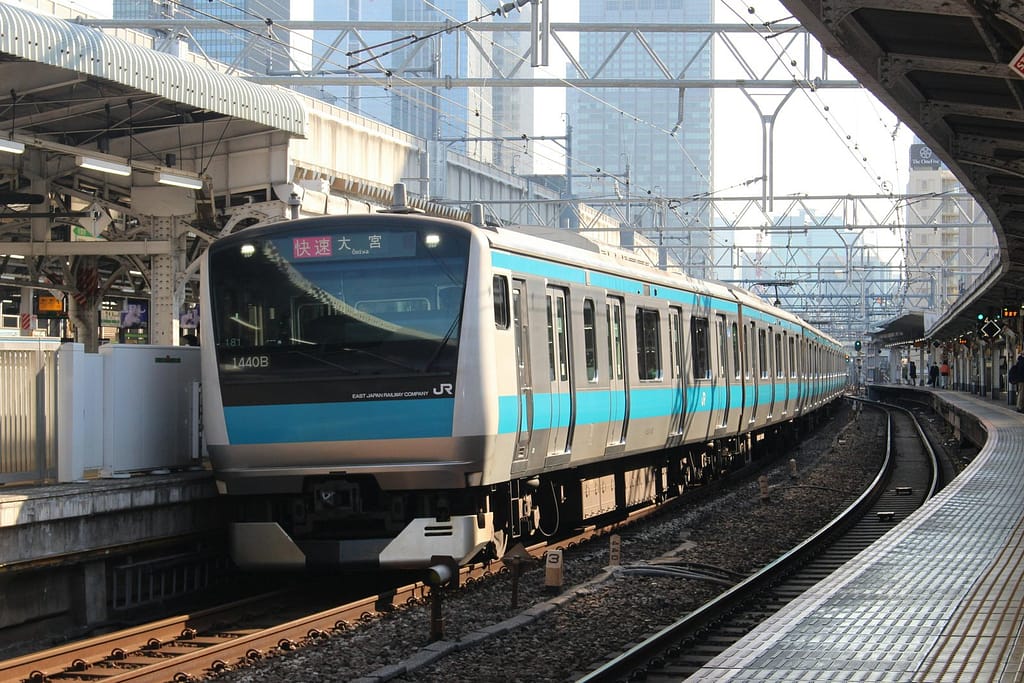
Sixty Years On: Paul Carter Explores Japan’s New Golden Route Aboard the Iconic Bullet Train
Standing on platform 19 at Tokyo Station, a vibrant hub of modern rail travel, it’s hard to imagine that 60 years ago this year, the first Shinkansen train left from here, heading toward the port city of Osaka.
Instantly recognizable for its sleek, sloping nose and smooth aerodynamic curves, the Shinkansen was the world’s first high-speed train and soon became known globally by its English name: the bullet train.
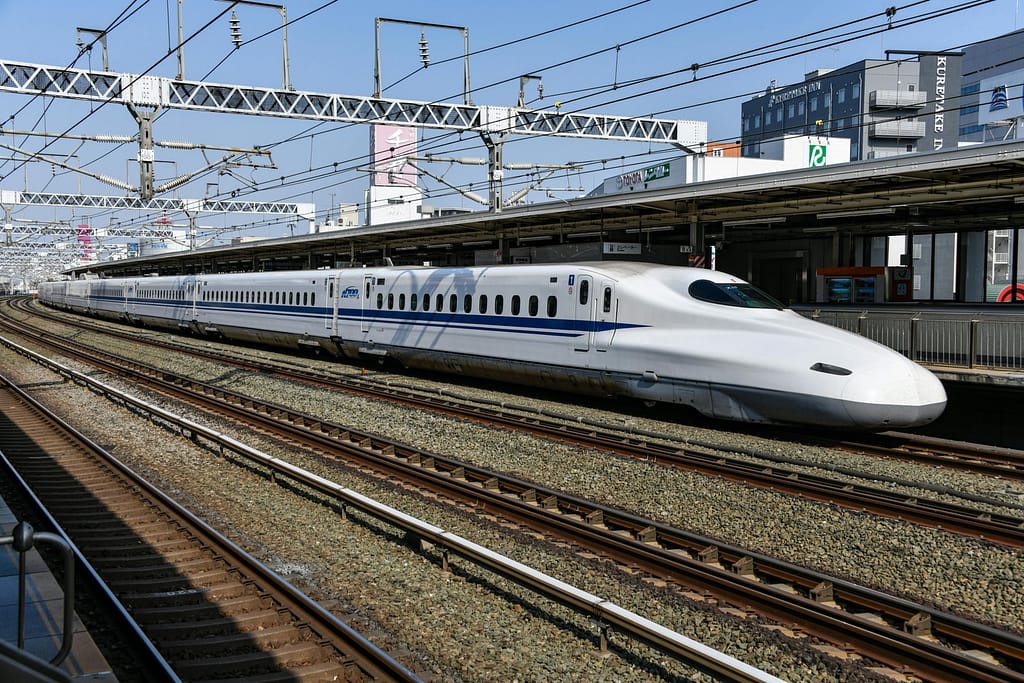
The high-speed line between Tokyo and Osaka – the Tokaido Shinkansen – became known as “The Golden Route,” quickly transporting passengers between two of Japan’s iconic cities in less than two and a half hours, passing by the beauty of Mount Fuji and the ancient capital of Kyoto.
Amid the crowd of people boarding and disembarking from Shinkansen trains (famous for their punctuality), I met Naoyuki Ueno, a former Shinkansen driver and now a senior executive at Central Japan Railway Company. He shared that since the train’s launch, it has carried an incredible 6.8 billion passengers across Japan.
“I’m proud of the Shinkansen,” he said. “As a Japanese citizen, I’m proud of that.” This is the lasting impact of the bullet train on Japan.
Stepping off the Shinkansen in Toyama, just two hours from Tokyo, I boarded a small local train to the scenic resort town of Unazuki Onsen. Known for its traditional hot springs (onsen) and surrounded by the stunning Kurobe Gorge, it felt like a peaceful escape from the fast-paced Tokyo metropolis. The town’s connection to the springs is so deep that there’s even a foot spa at the end of the train station platform.
My guide, Hashimoto Yukinori, or “Yuki,” took me to one of his favorite onsen in the town, offering panoramic views across the valley. He explained that onsen are typically enjoyed naked and communally. (For the sake of television, we were allowed to wear swimsuits, which is normally not the case.) Despite being relaxing, onsen aren’t for the faint of heart: the water temperature was around 40°C, and sometimes it’s even hotter.
“In Japan, we have lots of active volcanoes, so hot springs are all over,” Yuki said. “It’s very relaxing and healing. Nature is very important to us, as we live on mountainous islands with volcanoes and frequent disasters. We both fear and respect nature.”
The highlight of Unazuki Onsen, at least for train enthusiasts like me, is the Kurobe Gorge Railway. This narrow-gauge line was originally built for the construction of the Kurobe Dam. Running through a forested ravine and offering 20km of breathtaking scenery, it’s the perfect way to immerse yourself in nature.
Afterward, I boarded the Shinkansen to head to Kanazawa, a city historically known for its samurai and gold. Famous for producing 99% of Japan’s gold leaf, Kanazawa blends the old with the new. The city feels lively yet calm, and after tasting gold leaf-covered ice cream, it was time to hop back on the train.
Next, I traveled to Wajima in the Noto Peninsula, a place recently impacted by disaster. On New Year’s Day 2024, a 7.6-magnitude earthquake struck, devastating the city and surrounding areas. Due to the damage, the city isn’t accessible by rail at the moment. Instead, I took a small local train to Anamizu and then drove to Wajima.
When the train arrived, it wasn’t just any train; it was adorned with colorful Pokemon characters, including Pikachu and Bulbasaur. This special train was introduced to bring joy to children who had suffered in the earthquake’s wake.
Visiting Wajima was both sobering and humbling. Many buildings remain partially collapsed, making it feel like a real-life disaster scene. However, the locals are focused on rebuilding, with a special emphasis on restoring Wajima-nuri, the city’s traditional lacquerware. This craft is seen as key to restoring their culture and way of life.
This journey demonstrated the impact of the bullet train, not just in transportation, but in connecting people, cultures, and even aiding in the healing process after disasters.

Takahiro Taya, a tenth-generation lacquerware producer in Wajima, told me, “If the quake destroyed our industry, many people would lose their jobs. So, I must rebuild this industry for the craftsmen, of course, and for their customers. And I have a son. He’s two years and eight months old. I want to pass this job on to him.”
Afterward, I took one last ride on the Shinkansen to complete my journey to Osaka, Japan’s second city. As I left the countryside behind and entered the urban sprawl, I reflected on how much Japan has changed over the past 60 years. Today, it’s a nation of ultra-modern cities and cutting-edge innovation, but its people still take immense pride in their ancient traditions and rural heritage. In a way, the Shinkansen, which links the country’s bustling metropolises to its remote regions, reflects Japan as a whole—a nation reaching for the future while cherishing its past.
Japan is a country of remarkable contrasts, and the impact of the bullet train has been profound. It has made it possible to reach even the most distant corners of the nation in a surprisingly short amount of time. While high-speed rail is designed to get you from one place to another quickly, it also offers much more than that. It allows travelers to step off and truly experience the surroundings, venturing off the beaten path. Happy birthday, Shinkansen. Here’s to the next 60 years.